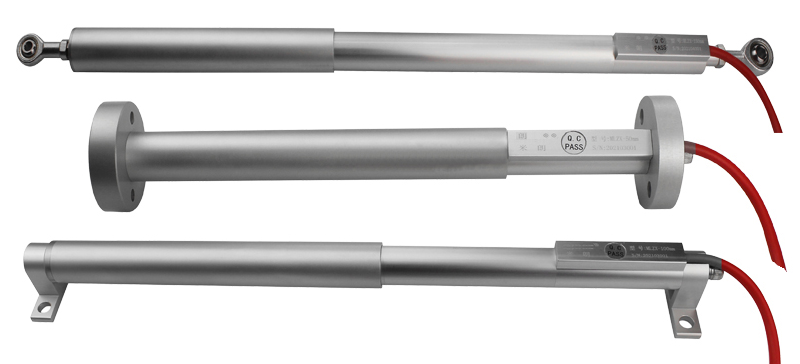
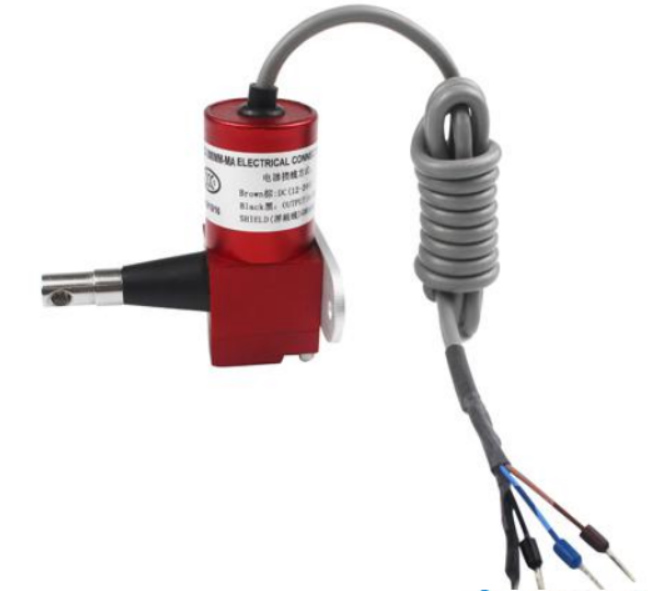
Sensor used to measure displacements or movements in structures or materials. Its operating principle is based on the vibration phenomenon of a taut string.
The vibrating wire crack gauge is a highly valued and widely used non-electrical measuring sensor, both nationally and internationally. It incorporates a heat-treated vibrating wire sensing element, one end connected to the vibrating wire and the other to a sliding rod formed by a tension-relieving spring.
+ read more
When the sliding rod is pulled, the spring begins to stretch, increasing the tension in the vibrating string. The vibration frequency of the steel wire varies accordingly, with the tension being proportional to the spring's elongation. Therefore, the change in displacement can be determined by measuring the tension in the steel string, that is, the change in its vibration frequency.
Since the vibrating wire sensor directly emits the natural vibration frequency signal of the vibrating wire, it is characterized by high anti-interference capability, low influence of electrical parameters, low zero drift and low temperature influence, stable and reliable performance, vibration resistance, and a long service life. Application fields of the vibrating wire surface crack gauge (displacement sensor):
Vibrating wire displacement sensors are widely used for measuring displacement, settlement, deformation, cracking, etc., in structures such as dams, bridges, rocks, concrete, soil, roads, workshops, tunnels, underground caverns, and model testing. They are also used for monitoring displacement changes.